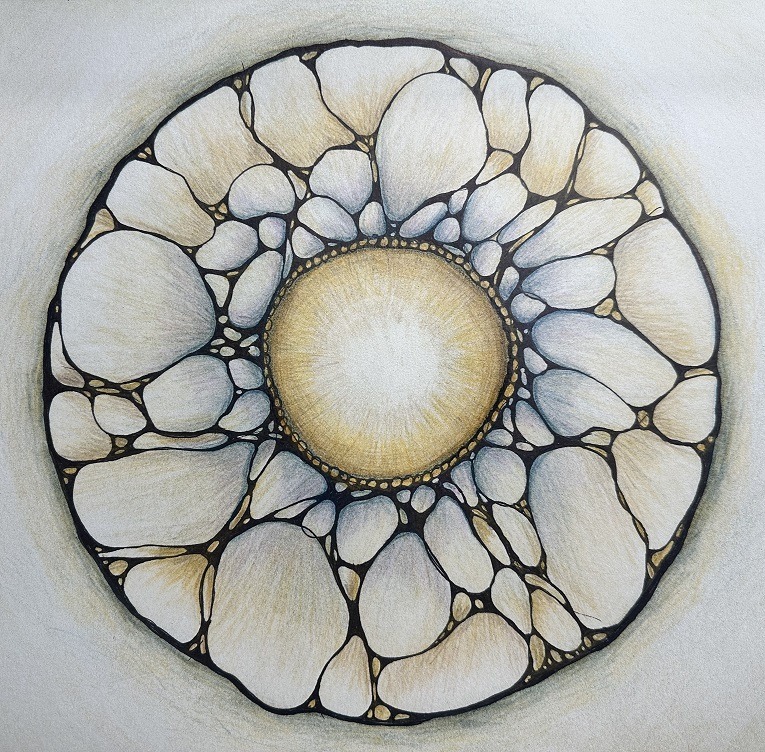
Grief Support Mandala | A gentle drawing space for loss, remembrance, and emotional holding
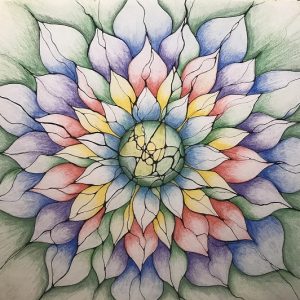
Grief Support Mandala creative drawing offers a gentle, non-verbal way to meet grief in its earliest and most vulnerable stages. In the days and weeks following a loss, emotions can feel overwhelming, fragmented, or impossible to articulate. This NeurographicAI™ Grief Mandala is designed specifically for that tender phase, when words fail and the nervous system seeks safety, containment, and reassurance rather than resolution.
This drawing process does not attempt to explain grief, fix it, or move it on. Instead, it offers a quiet, structured space where grief can exist exactly as it is. Through simple shapes, intentional lines, and mindful use of colour, participants are supported to acknowledge loss without pressure, judgement, or expectation.
What this drawing offers
Grief Support Mandala is grounded in the understanding that grief is not linear, logical, or tidy. In early grief, people often feel lost, emotionally flooded, or disconnected from themselves and others. Talking can feel exhausting or intrusive. This drawing provides an alternative path — one that allows expression without words.
The circular mandala structure creates a sense of emotional holding. Circles are inherently calming to the nervous system, offering a visual and felt sense of safety, boundary, and containment. The act of drawing within a circular form helps reduce overwhelm, gently anchoring attention and emotion within a defined, supportive space.
This is not art for performance or outcome. It is a process-led practice that prioritises presence, care, and emotional permission.
The NeurographicAI™ structure explained
At the heart of this drawing is a carefully considered symbolic structure:
The outer circle acts as a protective boundary, representing safety, containment, and emotional permission. It marks the space where grief is allowed to exist without intrusion.
The central circle represents the heart — the emotional core where love, loss, and longing reside.
Smaller circles surrounding the heart symbolise memories, qualities, shared moments, and the essence of the person who has passed.
NeurographicAI™ lines extending outward represent the ongoing connection between love, memory, and life beyond loss. These lines acknowledge that while life continues to move, the bond remains present and meaningful.
Participants are invited to choose colours intuitively or intentionally — often drawing on colours associated with the person who has died, or colours that feel emotionally supportive in the moment. There is no right or wrong outcome.
Why drawing, not talking
In early grief, the brain often operates in survival mode. Language processing can feel inaccessible, while the emotional and sensory systems are heightened. Drawing engages the brain differently, offering a gentler route to emotional processing without forcing verbal articulation.
The repetitive, mindful movements of drawing can support nervous system regulation, helping participants feel more grounded and present. This makes the Grief Mandala particularly suitable for those who feel overwhelmed by conversation, counselling, or group sharing in the immediate aftermath of loss.
Who this is for
Grief Support is suitable for:
Individuals in early grief, whether recent or delayed
Those who feel emotionally overwhelmed or numb
People who struggle to talk about their loss
Those seeking a non-clinical, creative approach to grief support
It can be used individually or within a guided workshop setting. Participants are always encouraged to work at their own pace, stopping or resting whenever needed.
What participants may experience
Each person’s experience will be unique. Some may feel emotional release, others may experience calm, stillness, or quiet reflection. Some may feel nothing at all initially — which is also valid.
This drawing does not promise healing, closure, or emotional resolution. Instead, it offers presence, acknowledgement, and permission — allowing grief to be seen and held rather than avoided.
Ethical positioning
This drawing is non-clinical and non-therapeutic. It does not replace counselling, therapy, or medical support. It is an optional, creative wellbeing practice designed to complement personal grief journeys.
Participants remain in control of their process at all times. There is no pressure to share, interpret, or explain the drawing unless they choose to.
A note of personal integrity
The Grief Support series was designed in memory of the artist’s mother, Eleni, who passed on 7 January 2026. This work was created from lived experience, emotional honesty, and deep respect for the complexity of grief.
Closing reassurance
This drawing does not ask you to move on.
It does not ask you to be strong.
It simply offers a space where grief is allowed to exist — quietly, gently, and without judgement.
You are invited to meet your grief where it is, and to let it be seen.
Reviews
There are no reviews yet